Mainstream erotic cinema only goes so far. Below is a shortlist we put together ourselves: seven stories that dig into what desire, affection and power actually do to people, and that hand two partners a low-pressure excuse to test where their own limits sit while growing closer in the process.
If you've read our guide on how to use a vibrator on your wife, you already know the single most useful line in it: talk openly. Plenty of women don't warm to vibrators straight away, and getting comfortable takes time rather than one conversation. Putting on an erotic film together — 'Fifty Shades of Grey' being the obvious entry point — is one route toward that comfort.
The tip reached me second-hand, through a Discord server where a handful of husbands said the approach had worked on their own wives, and where the same conversation produced a stack of film suggestions in the same vein.
Still curious?
Here's the list, then: seven alternatives to Fifty Shades of Grey, a few of which you'll know already and a few you probably won't.
The Piano Teacher
Secretary
Bitter Moon
365 Days
Newness
Love
Crash
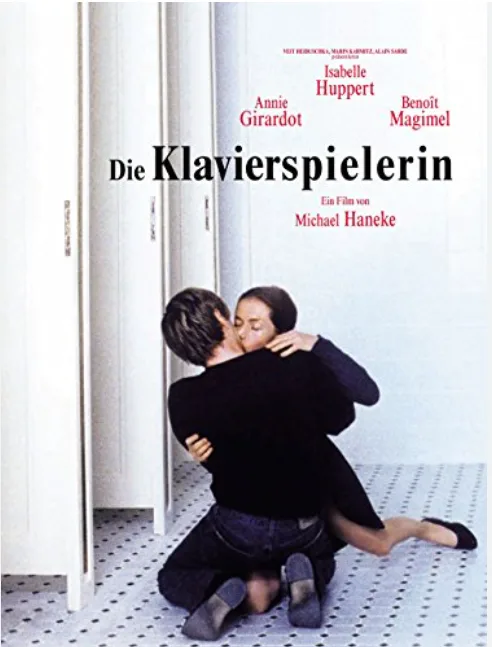
1. The Piano Teacher (2001)
Michael Haneke directs this psychological drama, and it grips hard. At its centre sits Erika Kohut, a gifted piano teacher whose emotional life has been shut down for years; everything shifts once Walter, one of her pupils, enters the picture. What grows between them pulls the film into obsession, appetite and the ugliest corners of who we are.
What makes it stick is how unsparingly it shows people wrestling with wants they'd rather not name, then living with what those wants cost. Isabelle Huppert plays Erika with an intensity that's hard to look away from; the turmoil inside the woman comes through so plainly it's almost painful to watch.
2. Secretary (2002)

Lee Holloway, a young woman who has hurt herself in the past, takes a job as secretary to a man called E. Edward Grey, and the arrangement between them stops being ordinary very quickly. She comes to the job right after a stay in a mental institution. Office formality gives way to something far more tangled and intimate, shaped by Grey's need to command and by the relief Lee finds in surrender.
Desire, control and the slow work of figuring out who you are all run through it, and the BDSM at the core gets handled from an angle you rarely see. Maggie Gyllenhaal gives Lee real texture, so the character's road toward accepting herself and taking charge actually lands. James Spader is just as good opposite her, playing a man whose confidence keeps cracking open over his own wants and fears.
Calling it a romance with a strange shape undersells the thing. Really it's a study of how messy two people can be together, and of the paths each of us takes through what we want and who we turn out to be.
3. Bitter Moon (1992)
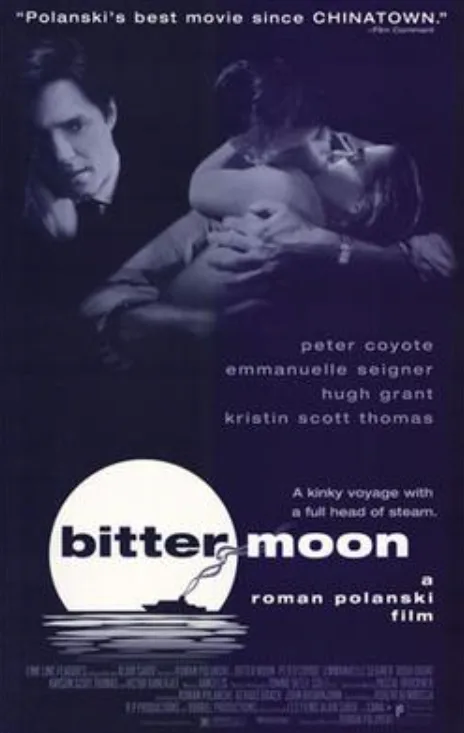
Roman Polanski's Bitter Moon spins a seductive tale about love, fixation and the knife in the back. Nigel, a novelist, encounters Mimi on a cruise liner — magnetic, and slightly unknowable. Oscar, her husband, starts telling him about the wreckage of the marriage, and before long Nigel is caught up in their secrets and their stranger appetites.
Passion and control tangle together across the runtime, with love, lust and the less flattering side of people all in the mix. Polanski's command of the material is sure-handed, and Hugh Grant, Kristin Scott Thomas and Emmanuelle Seigner turn in strong work — the result stays with you afterwards.
4. 365 Days (2020)

Laura, the heroine of this Polish production, is abducted by Massimo, a mob boss. He offers her a bargain: 365 days to fall for him, with luxury and heat promised should she choose to stay at his side of her own accord.
When it landed in 2020, the explicit material and the sheer intensity of it made the film a talking point. Critics have gone after 365 Days for how abduction and Stockholm syndrome are framed, yet it has defenders as well, and they point to the look of the thing, the camerawork, and the spark between Anna-Maria Sieklucka and Michele Morrone. A soundtrack of slow, smoky songs matches the mood and pulls you further in.
5. Newness (2017)

Newness turns a clear, unblinking eye on love and sex, and on how hard it is to build something with one person when every possibility sits one swipe away.
Martin and Gabi are millennials in Los Angeles; a dating app brings them together and things get serious fast. Riding the ups and downs of the affair forces them to work out what trust means to each of them, how close they can actually let the other get, and where the line falls between a screen and a life.
Its honesty about how people date now is what distinguishes it. Nothing about intimacy gets tidied up for the audience — not the way phones and apps reshape a couple, and not the foggy border between sleeping with someone and feeling something for them.
6. Love (2015)

Love goes straight at intimacy, appetite and the way people treat each other, and it isn't shy about any of it. Conventional narrative gets pushed aside in favour of explicit sex and feeling laid bare.
Murphy, a director based in Paris, looks back over what he had with Electra — a woman of fierce appetites and very little interest in being tied down. Flashbacks carry most of the weight, tracing the heat and the wreckage of the affair, and touching on jealousy, lust and the regret that follows.
Where it separates itself from other films is the blunt, unsentimental way sex is put on screen, which stretches what a conventional narrative will allow. Gaspar Noé's approach is immersive and unvarnished, and Karl Glusman and Aomi Muyock give performances strong enough to carry it; the whole thing feels physical rather than watched.
7. Crash (1996)
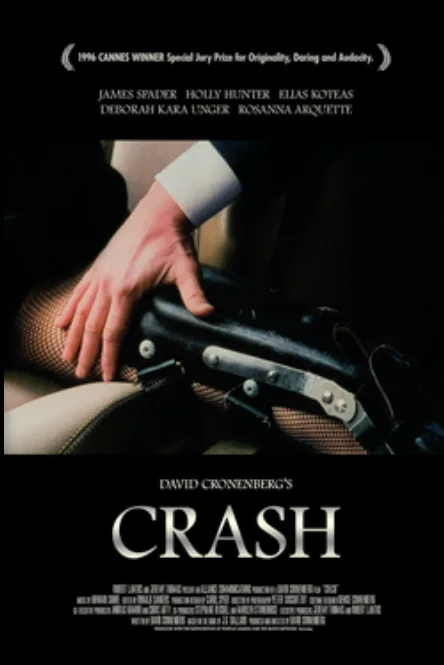
David Cronenberg's Crash takes on appetite and obsession of a kind most films won't touch. The characters at its centre get aroused by car crashes, and the film goes with them into symphorophilia — territory that stays taboo for a reason.
James Ballard, a producer, walks away from a collision that should have killed him, and from there gets pulled into sex that keeps circling back to wrecked metal. He isn't alone in it: his wife and a wider circle of enthusiasts go looking for the same thing, and the film uses that to press on danger, eroticism and how convoluted wanting can get.
If you want cinema that refuses to be safe and keeps digging at what people are capable of wanting, "Crash" is a ride you won't forget — sex, risk and fixation, all in the same frame.
Those are the 7. All of them came up repeatedly in one particularly frank Discord server.
Got one we missed that you'd rate higher? Tell us about it in the comments.
If any of these caught your interest, take the hint: closeness usually starts with something shared. Say in the comments which film hit hardest for you, and add a title or two of your own while you're there.